
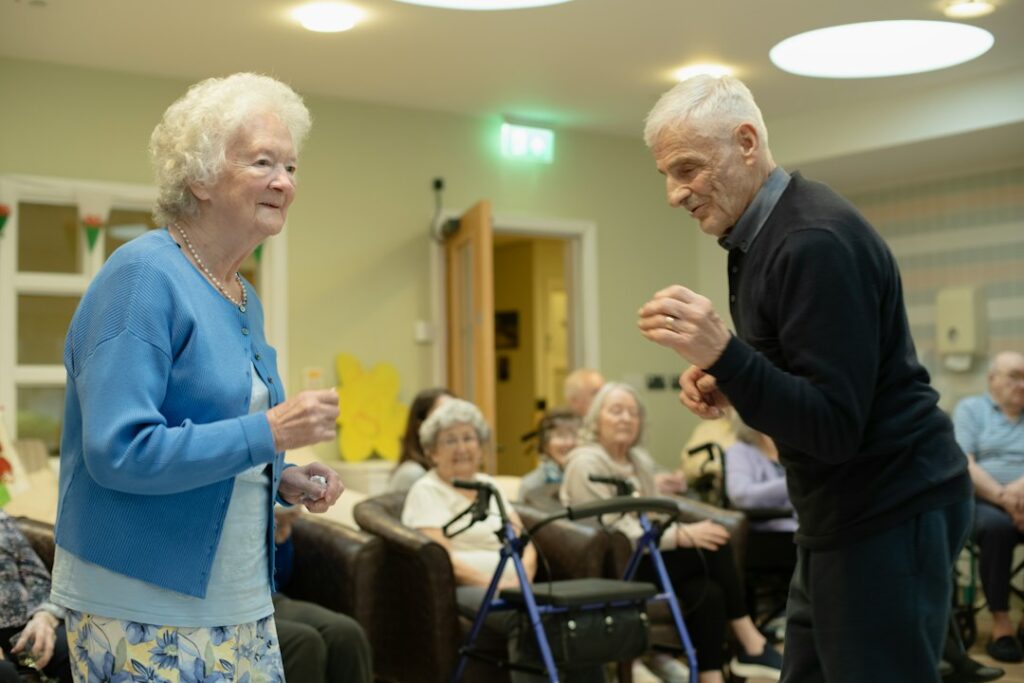
Assisted living can support an active lifestyle by making movement, social connection, and daily participation easier to maintain. The goal is not intense exercise or competition. It is helping residents continue using their abilities safely, enjoy meaningful routines, and remain involved in the community around them.
What does an active lifestyle mean in assisted living?
An active lifestyle includes much more than formal workouts. For an assisted living resident, activity may involve walking to meals, joining a group class, tending plants, participating in an outing, or helping with a shared task.
A well-rounded approach usually includes:
- Physical activity: Walking, stretching, balance exercises, strength-building, and gentle recreation
- Social activity: Conversation, games, clubs, group meals, and shared projects
- Mental activity: Puzzles, discussions, music, reading, learning, and creative work
- Purposeful activity: Volunteering, mentoring, organizing personal belongings, or contributing to community life
This broader definition matters because residents have different abilities, health conditions, interests, and energy levels. Someone may not be able to participate in a fitness class but may still enjoy walking short distances, folding laundry, singing, or attending a discussion group.
How do assisted living activities support physical health?
Regular movement helps residents preserve strength, flexibility, balance, and endurance. These abilities can make everyday tasks easier, including standing from a chair, getting dressed, using a walker, reaching for objects, and moving safely through a dining or common area.
Assisted living activity programs often include low-impact options such as:
- Seated or standing stretching
- Guided balance exercises
- Light resistance work using bands or small weights
- Walking groups or indoor walking routes
- Chair yoga or similar mobility activities
- Dancing, bowling-style games, or other adapted recreation
- Gardening and seasonal outdoor activities
Consistency is usually more useful than intensity. Short periods of movement repeated throughout the day may be more realistic and comfortable than a single demanding exercise session.
Residents should be able to modify an activity based on fatigue, pain, balance, breathing, or other health concerns. A safe program respects personal limits and does not treat participation as a test of athletic ability.
Why are walking and everyday movement so valuable?
Everyday movement helps prevent long periods of sitting and supports practical independence. Walking to a dining room, taking part in a hallway activity, or moving between common areas can add meaningful activity without feeling like a formal workout.
For residents who use canes, walkers, or wheelchairs, mobility can still be encouraged. Routes may include places to rest, clear pathways, handrails, and adequate lighting. Some activities can be completed while seated, allowing residents with limited standing tolerance to remain involved.
During icy or snowy periods, indoor movement becomes especially useful in Mount Pleasant. Safe indoor walking routes, seated exercises, and hallway activities can help residents stay active when outdoor surfaces are slippery or winter weather limits transportation.
Can assisted living support independence as well as exercise?
Yes. Activity programs can reinforce independence by giving residents regular opportunities to make choices, practice skills, and take part in routines that have personal meaning.
For example, a resident might choose between a morning walking group and an afternoon art activity. Another resident may help arrange materials for a card game or decide which music to play during a group program. These choices support confidence and personal control.
Daily tasks can also contribute to an active lifestyle. Depending on ability and care needs, residents may participate in:
- Setting a table
- Watering plants
- Organizing craft materials
- Choosing clothing
- Preparing a simple snack with supervision
- Folding towels
- Helping welcome another resident to an activity
These tasks should not be forced or used to replace needed assistance. Their value comes from offering appropriate participation and a sense of usefulness.
How do social activities affect health and well-being?
Social connection is a major part of staying active. Group activities encourage residents to leave their rooms, communicate with others, and maintain familiar patterns of interaction.
Common examples include music programs, discussion groups, board games, holiday gatherings, exercise classes, movie afternoons, and shared meals. Small-group activities can be especially helpful for residents who find large gatherings tiring or overwhelming.
Social activity may also support emotional well-being. Regular contact can reduce isolation, provide structure to the day, and create opportunities for friendship. A resident who is hesitant to join an exercise class may be more willing to attend if the activity includes conversation, music, or a familiar group.

Not every resident enjoys the same level of social interaction. An active lifestyle can include quiet participation, one-on-one conversation, reading with another person, or observing a group before deciding whether to join.
What should families ask about activity programs?
Families often focus on the number of scheduled activities, but the quality and flexibility of those programs matter more. Useful questions include:
- Are activities offered at different times of day?
- Are there options for residents with limited mobility or memory loss?
- Can activities be adapted for vision, hearing, or balance concerns?
- Is there access to outdoor space when weather permits?
- Are residents asked about their interests and past hobbies?
- Are activities voluntary rather than required?
- How are changes in ability, fatigue, or medical needs considered?
- Are there safe indoor options during severe weather?
It is also useful to ask how staff learn what motivates an individual resident. A former gardener may respond well to plants and seasonal tasks, while someone who enjoyed working with tools may prefer practical projects. Personal history often provides better guidance than a general activity calendar.
How can residents stay active if they are not interested in exercise?
Exercise does not need to be presented as exercise. Residents may be more willing to participate when movement is connected to something they already value.
Examples include walking while visiting with a friend, stretching during music, standing briefly during a familiar song, or taking part in a craft that involves reaching and hand movement. A supervised garden activity may provide gentle bending and walking, while a group game may encourage coordination and social interaction.
The most sustainable activities are usually enjoyable, familiar, and achievable. Residents should not feel embarrassed if they need rest breaks, a seated version, or assistance. Participation can change from day to day depending on sleep, pain, medication effects, mood, and health.
What makes an assisted living activity program effective?
An effective program is varied, inclusive, and responsive. It provides regular opportunities for movement and engagement while recognizing that residents have different needs.
The strongest programs typically:
- Offer activities throughout the day instead of concentrating everything in one period
- Include seated, standing, indoor, and outdoor choices
- Provide quiet alternatives for residents who prefer smaller settings
- Connect activities with residents’ histories and interests
- Encourage participation without pressure
- Adjust programs for changing abilities and seasonal conditions
- Make safety part of planning without removing all meaningful challenge
Active living in assisted living is not measured only by steps, repetitions, or attendance. It is also reflected in whether residents have reasons to get up, opportunities to make choices, connections with other people, and activities that give shape and purpose to the day.
